Response to Anna Atkins
- martine75
- Sep 14, 2021
- 2 min read
Updated: Oct 26, 2021
Researching Anna Atkins had inspired me to try her process, and I enjoyed making the cyanotypes or blueprints. I had never attempted anything like this before. I liked arranging the floral patterns and discovering what shapes the flowers and plants made. It was fun finding which plants were more successful and why.
I chose the more accessible precoated paper (Sunlight paper) option rather than the ferric ammonium citrate and potassium ferricyanide applied manually.
Materials.
Precoated sunlight/cyanotype paper.
Flowers and leaves from the garden.
Bowl of water to wash out the prints after they have been exposed.
Board, clips and piece of glass.
The sun, at various times of the day producing different shadows and prints.
The Process.
Making different patterns and arrangements was enjoyable. It was an unusually warm September day so the light in the garden was bright. I experimented with the diminishing light throughout the day.


Results.
Images of A5 cyanotypes.


Close up images


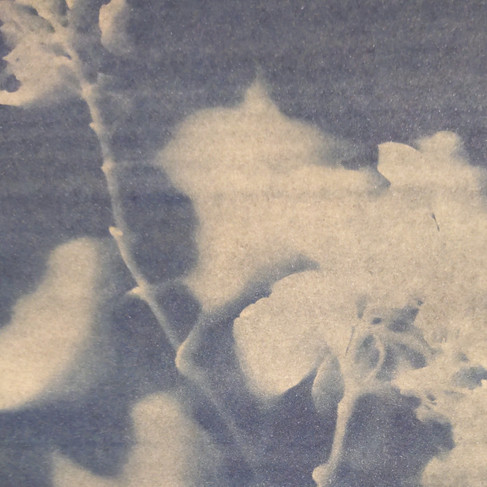


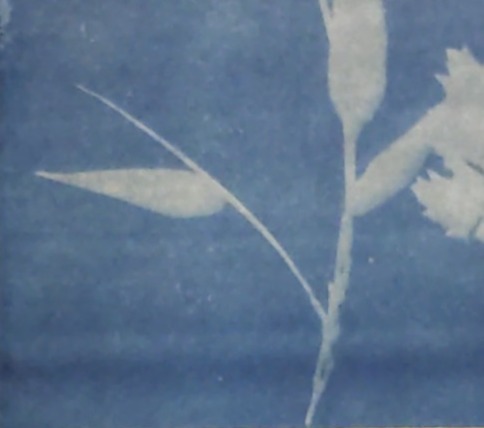
I liked the below arrangement of the daisies because it reminded me of the daisy chains I made when I was a child. The image is simple but effective. By that, I mean it evokes a feeling of childhood (for me).
I created the images with the most profound blue backgrounds in the most intense light and the more ethereal pieces in the afternoon.
I love all of the pieces; they are delicate, dreamlike, blurry and indistinct. I can see why Anna Atkins made so many, and it seems an enriching pastime!

What have I learnt?
Using large headed flowers and thicker stemmed plants (ones that aren't flat to the paper's surface) cause more of a blurred result.
The 'squashed flat' flowers and leaves gave more defined marks.
Exposing the paper for any more than 10 minutes didn't have any effect on deepening the blue for this particular paper.
Pressed flowers without moisture produce a more x-ray translucent results.
Washing the chemicals off, for a minute or so, improves the tone of the deep blue exposed paper.
Using delicate or fibrous leaves or flowers creates intrigue.
I can also use negative photographic images to create a positive cyanotype.
I can paint on a piece of acetate and use this as a kind of stencil to expose to the sunlight.
I can use any small media or objects to make marks i.e textiles or material, organics, man-made objects or even sprinkle water onto the surface of the paper.
How can I develop the cyanotype images?
Could I paint over these marks?
If I used the chemicals to coat a piece of watercolour/fabriano paper and then make my cyanotype, I could use this paper to blend over and add either watercolour, acrylic or oil.
Watercolour or Fabriano paper because they are robust and would have less chance of tearing when removing the chemicals in the water, .
Using the pre coated paper gave good results but, the paper isn't of a high quality for painting onto, especially wet on wet.
Could I copy the cyanotypes in paint? Maybe blue and white or maybe bright unnatural hues like Mimei Thompson uses, to make them have a more contemporary feel.


Comments